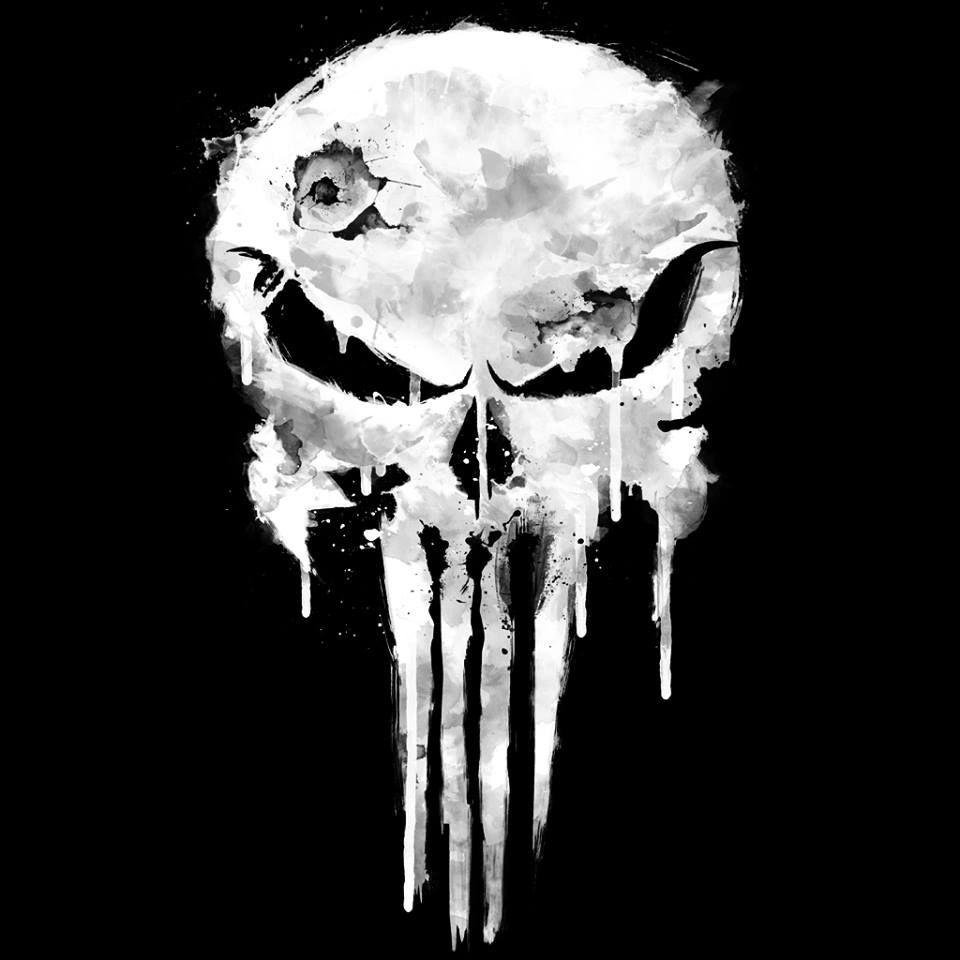
The image of a stylized, jagged white skull on a black background is instantly recognizable, a stark emblem that has permeated everything from comic book pages to military gear, protest signs, and even political rallies. This is the Punisher logo, an icon whose journey from the gritty margins of Marvel Comics to a highly visible, and often contentious, symbol in popular culture speaks volumes about its complex cultural impact and enduring pop culture status. It's a symbol that has been embraced, reinterpreted, and appropriated, often far beyond its original intent, sparking debates about vigilantism, justice, and the very nature of symbols themselves.
At a Glance: The Punisher Logo's Journey
- Born of Betrayal: The Punisher's skull originated in 1970s Marvel comics as a vigilante's emblem, representing Frank Castle's personal vengeance against a system that failed him after his family's murder. It signifies a belief in broken justice, not blind loyalty to law enforcement.
- A "Grim and Gritty" Icon: Its rise coincided with darker, more realistic comic narratives, resonating with a public grappling with anxieties about crime and order.
- Cultural Appropriation: The logo has transcended its fictional origins, adopted by diverse real-world groups including military personnel, police, and far-right organizations, often misinterpreting or deliberately twisting its original meaning.
- Marvel's Dilemma: As the intellectual property owner, Marvel (and Disney) has struggled to manage the logo's real-world connotations, attempting both in-story disavowals and redesigns, often with mixed results and a keen eye on their bottom line.
- An Independent Signifier: Today, the skull functions as a potent cultural signifier largely independent of its comic book canon, its meaning shaped by who displays it and in what context.
The Skull's Genesis: A Symbol Born of Betrayal, Not Blind Justice
To truly grasp the Punisher logo's sprawling impact, we must first revisit its origins. Frank Castle, a decorated Vietnam veteran, first appeared in Amazing Spider-Man #129 in 1973. His backstory is a crucible of profound betrayal and humiliation: his family was brutally murdered in a mob shootout, and he believed the police and courts failed to deliver justice. This wasn't a hero driven by a desire to uphold the law, but by a consuming rage at a broken system.
Castle adopted the skull as his emblem, a stark visual declaration of his war on crime. While reportedly inspired by the Nazi SS "totenkopf" (death's head) – a chilling historical echo – Castle's skull quickly evolved into something distinctly his own: a symbol of raw, personal vengeance. It was never intended to represent blind loyalty to law enforcement or government authority. Quite the opposite; it signified his profound distrust and rejection of those very institutions, believing they were incapable of protecting the innocent. This nuanced origin is crucial, yet often overlooked, in understanding its later misinterpretations.
Marvel's antihero resonated because he was, in essence, an alienated everyman. As academic researcher Peter Worcester notes in "A Cultural History of the Punisher," Castle’s maskless, unremarkable face made him relatable, a terrifying mirror for societal frustrations. He was designed to be rigid enough to meet reader expectations of a lethal vigilante, yet malleable enough for Marvel's creative teams to adapt across various product lines.
The Grim and Gritty Era: Punisher's Rise in Pop Culture
The Punisher's ascent in popularity wasn't an isolated phenomenon; it was deeply intertwined with a broader cultural shift towards "grim and gritty" narratives in the 1980s. Comics like Frank Miller's Batman: The Dark Knight Returns and Alan Moore's Watchmen redefined what superhero stories could be, pushing boundaries with darker themes, moral ambiguity, and more realistic violence.
Frank Castle's narrative found fertile ground in this era. His conceptual roots can be traced to 1970s and 1980s hard-boiled paperbacks, like Don Pendleton’s The Executioner series featuring Mack Bolan, which popularized the idea of a lone wolf dispensing justice outside the law. Initially, early Punisher stories (1974-early '80s) often depicted him as "trigger happy," a violent counterpoint to more thoughtful superheroes. However, this evolved dramatically with Steven Grant’s and Mike Zeck’s "Circle of Blood" (1986), which launched Castle's first solo series. This marked a definitive shift to a "grim and gritty" tone, aimed at older readers, and quickly superseded earlier, more simplistic iterations.
This first major production cycle (mid-'80s to mid-'90s) saw the character's iconography firmly established, generating spin-offs like The Punisher Armory, which chillingly detailed Castle's antisocial routine through his weaponry. The Punisher wasn't just a comic character; he was a reflection of real-world anxieties about crime and the perceived failures of the justice system, mirroring the rise of real-world vigilante figures like Bernhard Goetz who garnered public attention.
The second major production cycle, beginning around 2000, saw Garth Ennis deliver a particularly hard-bitten, unflinching take on the character. This iteration aligned starkly with the post-9/11 "War on Terror" zeitgeist, deepening the Punisher's resonance as a figure willing to do whatever it takes in a world perceived as increasingly dangerous and morally ambiguous. Subsequent efforts tried to integrate Castle more directly into the wider Marvel Universe, leading to sometimes strained storylines like "Franken-Castle" or "Cosmic Ghost Rider," which tested the character's core identity.
When a Logo Outgrows Its Source: The Skull's Cultural Appropriation
Here's where the story of the Punisher logo truly detaches from its creators' hands. Over decades, the skull evolved from a fictional vigilante's mark into a semiotically loaded symbol, subject to widespread cultural appropriation. Its striking design, evoking death, intimidation, and unwavering resolve, made it irresistible to groups seeking a visual shorthand for their own intense convictions.
Perhaps the most visible appropriation has come from pro-police circles and military personnel. Figures like Navy SEAL Chris Kyle, subject of American Sniper, famously adopted the Punisher skull, cementing its association with a certain brand of warrior ethos. For many in these communities, the skull represents an uncompromising commitment to justice, often interpreting Castle's methods as a necessary blunt force against evil where traditional systems fail. However, this often overlooks Castle's fundamental distrust of the very systems they aim to uphold.
The logo's journey has also taken a darker turn, unfortunately becoming a banner for far-right groups and even domestic extremists. The sight of the Punisher skull emblazoned on flags and attire at the January 6, 2021 Capitol riot, or at the Charlottesville rally, sent shivers down the spines of many who understood its origins. In these contexts, the skull often signifies a rejection of democratic institutions, a embrace of authoritarian vigilantism, and a clear statement of "us vs. them."
This widespread adoption inevitably led to fierce debate. In June 2020, Punisher co-creator Gerry Conway launched "Skulls for Justice," pairing the skull with Black Lives Matter verbiage. Conway explicitly stated the logo was "never intended as a symbol of oppression" but rather of "systematic failure of equal justice." His intent was to reclaim the symbol for its original meaning: a rebellion against a broken system, not an endorsement of unchecked authority. Similarly, writer Mike Baron offered his own contemporary vision, suggesting the Punisher would be "on the southern border dealing with coyotes, snake heads, terrorists, and child molesters," reflecting a specific political viewpoint on what constitutes "justice."
These divergent interpretations underscore a fundamental truth: the Punisher, as an intellectual property (IP), is ultimately controlled by Marvel Entertainment (part of Disney), but its iconography has taken on a life of its own. As Worcester's research emphasizes, each iteration of Castle reflects societal concerns, but the logo itself has become an independent cultural signifier, much like Pepe the Frog, largely beyond the control of its original creators or owners.
Marvel's Tightrope Walk: Reclaiming or Redefining the Icon?
Faced with the uncomfortable reality of their IP being co-opted for purposes antithetical to its spirit, Marvel has tried to navigate this treacherous terrain. Their responses have ranged from in-story dialogue to significant redesigns, all while balancing creative integrity with commercial interests.
One notable attempt to address the controversy occurred in Punisher #13 (2019), where Frank Castle himself confronts police officers wearing his logo. He tears the skull patch from an officer's uniform, admonishing them with words to the effect of: "I'm not here to protect you. I'm here to punish." This in-story disavowal was a clear, if perhaps heavy-handed, message from Marvel attempting to clarify the character's stance and distance him from perceived endorsements of institutional power.
More recently, Marvel undertook a more drastic measure: redesigning the skull. In 2022, the classic, stark skull was replaced with a more demonic, stylized caricature, incorporating samurai aesthetics. This was largely interpreted as an effort to make the logo less appealing to groups who had appropriated the original, forcing a visual break from its contentious real-world uses. However, these actions are often seen through the lens of a calculated move for the company's bottom line, rather than a purely ethical one.
The reality is that the Punisher canon is, by its very nature, tonally and philosophically incoherent. While Marvel/Disney has the final say over the character, the stories themselves are open to diverse interpretations, allowing the logo's meaning to mutate in the public consciousness. Despite their efforts, the skull's real-world uses have often outstripped its fictional meaning, becoming a powerful symbol that can convey different messages depending on who wields it.
Interestingly, recent developments suggest Disney may have learned a lesson about diluting the character's gritty essence. The decision to bring back the original, classic skull in the upcoming Daredevil: Born Again series indicates a potential recalibration, perhaps realizing that the character's core appeal lies in its stark, uncompromising nature, and that attempts to sanitize or rebrand it might alienate its core audience.
Beyond the Skull: Understanding the Punisher's Enduring Appeal
So, why does Frank Castle, and by extension his skull logo, continue to hold such a powerful grip on the popular imagination? It's more than just a cool design; it taps into primal human emotions. Castle is a character driven by profound betrayal, humiliation, and shame. His wrath is compulsive and unregulated, capable of being aimed at targets as varied as street thugs, corrupt bankers, or international terrorists. He represents a fantasy of absolute, uncompromising justice in a world that often feels unjust and chaotic.
The Punisher acts as a barometer for societal concerns. As Worcester's study suggests, each iteration of Castle is less a driver of cultural trends and more a reflection or reaction to them. When society feels unsafe, when trust in institutions erodes, the appeal of a lone individual who "gets the job done" intensifies. The skull becomes a badge for those who feel let down by the system, whether they interpret that system as a corrupt government, a lenient justice system, or simply the forces of chaos and evil.
For creators and rights holders, the Punisher represents a perennial challenge. How do you manage an IP whose core appeal is its uncompromising nature, but whose symbol has been co-opted by groups promoting ideologies far removed from its original intent? It’s a tightrope walk between maintaining artistic vision, protecting the brand, and navigating the unpredictable currents of cultural discourse.
Navigating a Loaded Symbol
The Punisher skull is a potent case study in how symbols evolve and take on lives independent of their creators. It began as a dark emblem of personal vengeance against a broken system, a counterpoint to traditional heroism. Its "grim and gritty" aesthetic resonated with a society grappling with its own anxieties, cementing its place in pop culture.
However, its stark simplicity and uncompromising message made it ripe for appropriation. From military valor to extremist ideology, the skull has been worn by countless individuals and groups, each imbuing it with their own meanings, often divorcing it entirely from Frank Castle's original narrative. Marvel's attempts to control this narrative have highlighted the limits of intellectual property ownership in the face of widespread cultural reinterpretation.
When you encounter the Punisher skull today, remember its complex journey. Ask yourself: What is the context? What is the intent of the person displaying it? Is it a statement about a broken system, a glorification of unchecked power, or something else entirely? The Punisher logo is no longer just a comic book symbol; it's a dynamic, evolving cultural artifact, a testament to the unpredictable power of iconography in the modern world.