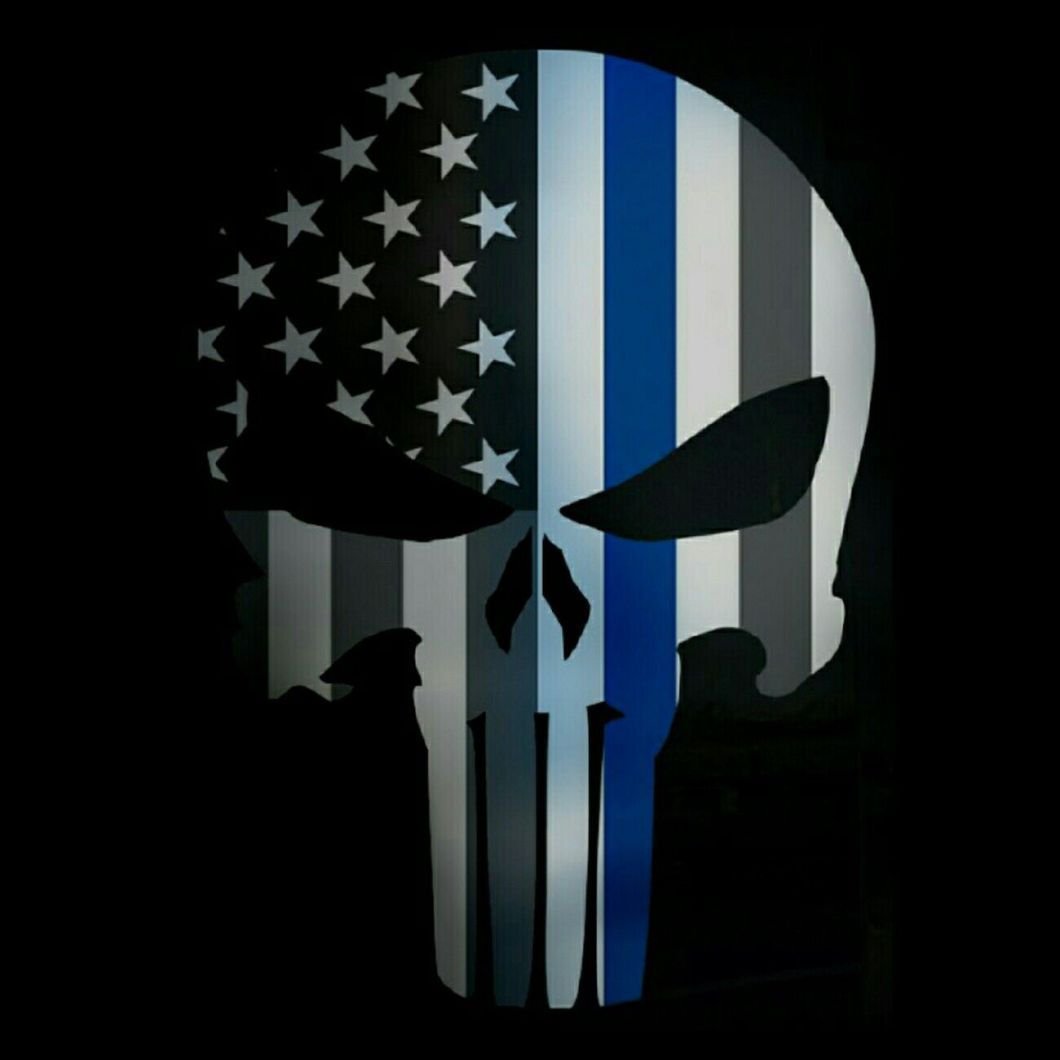
The skull stares out from bumper stickers, patches, and even official vehicles, an unmistakable emblem that instantly broadcasts a message. But what exactly is that message when the Punisher logo finds its way into military and law enforcement contexts, and why does its widespread adoption continue to fuel intense debate and controversy? It's a question that cuts to the heart of symbolism, accountability, and the very nature of justice.
The iconic skull, originally designed for a fictional vigilante, has become a real-world flashpoint, embraced by those who feel it represents strength and a no-nonsense approach to crime, yet vehemently rejected by others who see it as a symbol of overreach, brutality, and a dangerous disregard for due process. Understanding this complex cultural phenomenon requires looking beyond the image itself to its origins, its journey, and the powerful, often conflicting, interpretations it evokes.
At a Glance: The Punisher Logo's Complex Journey
- Comic Origins: The Punisher, Frank Castle, debuted in Amazing Spider-Man #129 in 1973 as a vigilante ex-Marine who kills criminals. His skull logo quickly became iconic.
- Military Adoption: The symbol gained traction with U.S. servicemen, especially during the Iraq War (2003), popularized by figures like Chris Kyle, who saw it as representing someone who "righted wrongs."
- Law Enforcement Embrace: Post-war, the logo transitioned to police forces, often linked to the "Blue Lives Matter" movement after 2014, appearing on squad cars and gear.
- Creator's Condemnation: Punisher creator Gerry Conway finds its adoption by law enforcement "distasteful," arguing the character is an "outlaw" and represents "a failure of the Justice system."
- Character's Own Stance: In Punisher #13, Frank Castle himself famously tears the logo off a police car, telling officers they are "not the same" as he upholds the law while he operates outside it.
- Ongoing Controversy: From Marvel's attempts to redesign the logo (and its eventual return) to recent uses by figures like FBI Director Kash Patel, the debate over its meaning and appropriateness persists.
The Skull's Genesis: From Comic Panels to Cultural Icon
Before it adorned military gear or police cruisers, the Punisher skull was the chilling emblem of Frank Castle, a fictional character born out of Marvel Comics. Introduced in Amazing Spider-Man #129 in 1973, Castle was the brainchild of Gerry Conway, Ross Andru, Frank Giacoia, and Dave Hunt. A former Marine captain, Castle's family was tragically murdered in a mob crossfire, leading him to wage a brutal, one-man war on crime, executing those he deemed "outside the law."
His iconic skull logo, initially a quick sketch by Conway and later refined by John Romita, was meant to be striking, a stark symbol of death and fear. It wasn't just a cool design; it was a psychological weapon, Frank Castle's personal flag in his crusade. Over the next decade, the Punisher's popularity soared, particularly with a successful miniseries in the mid-1980s, pitched by Mike Zeck and Steven Grant and edited by Carl Potts. This led to his own ongoing series and, by the early 1990s, three monthly titles and countless guest appearances, cementing his status as one of Marvel's most popular — and morally ambiguous — characters.
Even in these early days, the character's appeal to military personnel was evident. As early as Punisher #8, fan mail from active servicemen began to appear, and by the late 1980s and early 1990s, skull tattoos inspired by the Punisher were becoming common among troops. This initial resonance laid the groundwork for the symbol's later, more widespread adoption, bridging the gap between fiction and the harsh realities of combat. For a deeper dive, you can explore the full history behind the Punisher logo.
Crosshairs of Controversy: Why the Punisher Skull Resonates with Some... and Repels Others
The journey of the Punisher skull from comic book art to a widely recognized symbol among military and law enforcement personnel is multifaceted, rooted in a potent blend of admiration for the character's ruthless effectiveness and a desire to project an uncompromising stance against perceived evil. Yet, this very appeal is precisely what sparks such intense opposition.
The Symbol's Magnetic Appeal: Striking Fear into "Bad Guys"
A major turning point for the symbol's adoption was the Iraq War in 2003. It was during this period that Navy SEAL Chris Kyle, author of American Sniper, famously stated that he and others embraced the logo because the Punisher "righted wrongs. He killed bad guys. He made wrongdoers fear him." For soldiers facing extreme danger and moral ambiguities, the Punisher represented a simplified ideal: a warrior who knew who the enemy was and dealt with them decisively, outside the constraints of conventional warfare.
The skull was spray-painted on military equipment, vehicles, and structures, serving multiple purposes: it signified presence, asserted aggression, and, perhaps most importantly, built unit cohesion through shared iconography. It became a powerful, if unofficial, emblem of defiance and an unyielding commitment to eliminating threats. This wartime adoption cemented the skull's association with elite, lethal force, a narrative that would soon transition back home.
Following their return, many veterans entered law enforcement, bringing with them not only their experiences but also their cultural touchstones, including the Punisher logo. Fueled by these military-police interconnections and existing fan bases within both professions, the symbol began to appear with increasing frequency among American police officers. For many, it represented the same ideals as it did in combat: an uncompromising fight against crime, a willingness to confront danger, and a commitment to protecting the innocent, even if it meant operating on the edge.
The "Blue Lives Matter" Era: A Symbol of the "Thin Blue Line"
The "Blue Lives Matter" counter-movement, which emerged in late 2014 after the tragic murders of two New York City police officers, further propelled the Punisher logo into the mainstream of law enforcement culture. As the movement gained momentum, the skull became a common propaganda element, emblazoned on posters, decals, and merchandise, often recolored in blue to signify solidarity with police.
This trend wasn't limited to individual officers. In February 2017, police departments in Cattlesburg, Kentucky, and Solvay, New York, made headlines by featuring the Punisher logo, sometimes overlaid with a blue line, on their squad cars as a visible "Blue Lives Matter" tribute. Ed Clark, President of the St. Louis Police Officers' Association, articulated this sentiment, describing the symbol as representing "the war against those who hate law enforcement," signifying "we hold the line between good and evil." The image, for them, evoked a sense of unyielding protection and a refusal to back down in the face of perceived threats to societal order.
The logo's reach extended beyond uniformed personnel, finding a home among conservative websites and merchandise, notably appearing in the form of the "Punisher Trump" logo. This iteration depicted Donald Trump "exposing, punishing, and eliminating" political "villains," further demonstrating the symbol's perceived utility as an emblem of decisive, uncompromising action against perceived enemies. It became a powerful visual shorthand for a particular kind of justice, one that prioritized results over process. For more on this specific connection, consider reading about the Punisher logo's connection to the Blue Lives Matter movement.
The Creator's Plea: When the Artist Disowns the Art's Interpretation
Despite its widespread adoption by those who perceive themselves as upholding the law, the Punisher's creator, Gerry Conway, has consistently and vocally condemned this particular use of his creation. For Conway, the adoption of the Punisher skull by police officers and military personnel is not just ironic; it's profoundly "distasteful."
Conway argues that the very essence of the Punisher character is fundamentally at odds with the role of law enforcement. He states unequivocally that the Punisher represents "a failure of the Justice system." Frank Castle is not a hero who works within the system; he is "an outlaw" and "a criminal," a character whose existence highlights the shortcomings of legitimate legal avenues. "The Punisher," Conway asserts, "is anti-police. The Punisher is anti-establishment."
The core of Conway's objection lies in this stark contradiction: "Police are supposed to be the law. They are supposed to be part of the Justice system. They are not supposed to be embracing a criminal's symbol." He believes that by adopting the Punisher's skull, officers inadvertently align themselves with a vigilante who operates outside the law, who murders suspects rather than arresting them, and who embodies a breakdown of the very system they are sworn to protect and uphold. This, in Conway's view, sends a dangerous and confusing message to the public, blurring the lines between legitimate authority and extralegal vigilantism.
The Comic's Counter-Narrative: Frank Castle Himself Intervenes
Perhaps the most potent critique of the Punisher logo's appropriation didn't come from a pundit or a commentator, but from the character himself. In a remarkable moment in Punisher #13 (published July 10th in the 2018 series), Frank Castle confronts two police officers who have emblazoned his iconic skull on their patrol car. His reaction is swift and unequivocal.
The Punisher, known for his relentless pursuit of criminals, actually tears the logo off the police car. His words to the officers are a stinging rebuke, directly addressing the fundamental difference between their roles: "We're not the same. You took an oath to uphold the law. You help people. I gave all that up a long time ago. You don't do what I do. Nobody does."
This scene serves as a powerful meta-commentary from the creators, directly confronting the real-world controversy. It underscores Gerry Conway's arguments, emphasizing that Frank Castle is not a model for law enforcement. He is a tragic figure, driven by personal vengeance, who operates entirely outside the legal framework. His methods are extreme, unlawful, and incompatible with the principles of due process and civil liberties that police officers are sworn to uphold. The Punisher's own rejection of his symbol by police forces delivers a clear message: to embrace the skull is to fundamentally misunderstand the true meaning of the Punisher skull and the character it represents. He even suggested Captain America as a more fitting symbol for officers, highlighting the stark contrast between a hero who embodies justice and a vigilante who embodies its failure.
Navigating the Ethical Minefield: Why Context Matters (and Why It's Often Lost)
The debate surrounding the Punisher logo isn't just about a comic book character; it's about the profound power of symbols and how their meaning can be distorted, reimagined, and lost when taken out of their original context. For public servants, understanding this distinction is critical, as their chosen symbols have tangible impacts on public trust and perceptions of justice.
The Complex Nature of Symbols: Intent vs. Impact
A symbol, by its nature, is rarely static. Its meaning can evolve, taking on new layers through cultural adoption, historical events, and individual interpretation. While some officers and soldiers might adopt the Punisher skull with the pure intent of signifying their resolve against evil or their readiness for battle, the impact of that symbol on the public, particularly on marginalized communities, can be drastically different.
For a police officer, a Punisher decal might mean "I'm here to protect you and punish those who harm you." For a civilian, especially someone who has experienced police misconduct or racial bias, that same decal might evoke fear, intimidation, or a belief that the officer views themselves as above the law, capable of dispensing vigilante justice rather than serving as an impartial enforcer of legal statutes. This disconnect between intent and impact is at the core of the controversy.
Impact on Public Perception, Trust, and Accountability
When law enforcement or military personnel adopt a symbol that originated with an anti-hero who operates outside the law, it inevitably blurs the lines between legitimate authority and vigilantism. This blurring can erode public trust, making it harder for communities to differentiate between officers who uphold legal procedures and those who might be perceived as taking matters into their own hands.
Public trust is built on principles of accountability, due process, and adherence to the rule of law. A symbol like the Punisher skull, which is synonymous with extrajudicial killings and a disregard for legal constraints, can subtly undermine these principles. It signals a willingness to bypass the system, which directly contradicts the oath public servants take. For police departments, this can lead to questions about their commitment to community policing, de-escalation, and civil rights. The increasing instances of Punisher logo appearing on police cars has certainly amplified these concerns.
The Fine Line Between Personal Expression and Official Endorsement
One common defense of using the Punisher logo is that it's a matter of personal expression, akin to a tattoo or a T-shirt. However, when that symbol is displayed by someone in uniform, on an official vehicle, or within a government institution, it ceases to be purely personal. It takes on an official connotation, implying the endorsement of the institution itself.
An officer's uniform, vehicle, and equipment are extensions of their authority. The symbols displayed on them are understood by the public to represent the values and principles of the entire force or branch of service. Therefore, the choice of such symbols is not a trivial matter; it reflects on the organization as a whole and influences how it is perceived by the very public it serves. This is especially pertinent when dealing with controversial imagery that has clear, and often negative, associations with vigilantism.
Marvel's Evolving Stance and the Return of the Classic Skull
The controversy surrounding the Punisher logo's real-world adoption has not gone unnoticed by Marvel Comics, the character's steward. In fact, the company has, at various times, attempted to navigate this fraught terrain, reflecting the tension between maintaining a popular character and acknowledging the problematic interpretations of his symbol.
In March 2022, Marvel Comics made a notable attempt to address the controversy by changing the Punisher's iconic skull logo in Punisher #1. The new design was a more stylized, angular skull, less explicitly a symbol of death and more reminiscent of Japanese Oni masks, signaling a shift in the character's focus and perhaps Marvel's desire to distance the character from the real-world appropriation. This move was widely seen as an effort to reclaim the symbol's narrative and mitigate the negative associations that had accrued around the original design.
However, the change was not permanent. The sheer popularity and recognition of the classic skull, coupled with the business realities of a beloved character, ultimately proved too strong to suppress. Marvel officially brought back the original, classic skull logo for Frank Castle in Punisher: Red Band #1 in September 2025. This return coincided with actor Jon Bernthal's highly anticipated reprisal of the character in Daredevil: Born Again, indicating a strategic decision to lean into the established iconography that fans recognize and connect with.
This back-and-forth illustrates the delicate balance Marvel faces: honoring the character's legacy and fan base while being aware of the real-world ethical implications of his symbol. While the company may not endorse the Punisher logo's use by law enforcement, the commercial power of the classic skull is undeniable, making any permanent rebranding a significant challenge.
The Latest Flashpoint: FBI Director Kash Patel's "Challenge Coin"
The controversy, far from fading, was recently reignited by a high-profile incident involving FBI Director Kash Patel, who utilized the Punisher skull logo as the basis for a "challenge coin." Challenge coins, often given as awards or tokens of recognition, are a deeply ingrained tradition within military and law enforcement cultures, representing camaraderie, achievement, and unit identity.
Patel's coin features a skull with spiders for eyes and guns for teeth on the front, a clear and unmistakable homage to the Punisher aesthetic, but with an even more aggressive, almost monstrous, visual language. The back of the coin, however, features the official FBI seal, alongside the inscription "Presented by the Director of the FBI Kash Patel," and an old Tommy gun.
This use immediately garnered significant pushback. Critics quickly pointed out the profound irony and potential contradiction of the Director of a federal law enforcement agency, sworn to uphold the Constitution and legal processes, adopting a symbol fundamentally associated with an anti-establishment vigilante who operates outside the law. The Punisher's entire ethos is built on the premise that the system — including agencies like the FBI — has failed, necessitating his violent, extralegal interventions.
The imagery on Patel's coin, with its overt aggression (spiders for eyes, guns for teeth, a Tommy gun), further amplified concerns that it promoted an adversarial and confrontational stance rather than one of impartial justice and public service. This incident serves as a stark reminder that even within the highest echelons of law enforcement, the appeal of the Punisher's uncompromising image can override the character's original meaning, leading to renewed public debate and questions about institutional values.
Understanding the Ripple Effect: Implications for Trust and Public Service
The debate around the Punisher logo isn't merely academic or about fictional characters; it has very real implications for how the public perceives and interacts with institutions tasked with maintaining order and justice. When symbols of vigilantism become intertwined with official authority, the ripple effects can be profound and detrimental.
Erosion of Trust in Institutions
The Punisher's existence in the comic world is predicated on the failure of the justice system. His skull, therefore, inherently symbolizes a rejection of lawful process. When this symbol is adopted by police, military, or federal agents, it can paradoxically signal to the public that these very institutions are either failing, condoning extralegal actions, or harboring individuals who believe they are above the law. This erodes public trust, making communities less likely to cooperate with law enforcement, report crimes, or believe in the fairness of the justice system. Trust, once lost, is incredibly difficult to rebuild.
Blurring Lines Between Vigilante Justice and the Rule of Law
The fundamental pillar of a democratic society is the rule of law, where justice is dispensed impartially, within established legal frameworks, and with due process for all. Vigilante justice, by contrast, is characterized by individuals or groups taking the law into their own hands, often with brutal and arbitrary consequences. The Punisher is the epitome of the latter.
By embracing the Punisher skull, public servants risk blurring the crucial distinction between these two concepts. It suggests an endorsement of "justice" dispensed outside the law, potentially encouraging a mindset where legal limits are seen as hindrances rather than safeguards. This can have dangerous consequences, from fueling excessive force to creating an environment where accountability is diminished.
The Importance of Symbols for Those Upholding the Law
Symbols are powerful tools for communication, capable of conveying complex ideas and values in an instant. For institutions like the military and law enforcement, the symbols they choose to display should unequivocally reflect their mission: service, protection, justice, integrity, and adherence to the Constitution.
Symbols that resonate with these values—like a shield, a flag, or a balanced scale—reinforce their legitimate authority and commitment to the public good. Adopting a symbol like the Punisher skull, which carries connotations of lawlessness, vengeance, and a contempt for due process, contradicts this mission and creates dissonance. It fails to inspire confidence and instead fosters apprehension, particularly among those who are most vulnerable or have historically been targets of injustice. This is why All about the Punisher logo continues to be a hot topic in discussions around institutional ethics.
Moving Forward: Guiding Principles for Public Servants and Concerned Citizens
The ongoing controversy surrounding the Punisher logo serves as a crucial reminder of the power of symbols and the responsibility that comes with displaying them, particularly for those in positions of authority. As we navigate an increasingly complex world, how do we ensure that the symbols we choose truly represent the values we espouse?
Reflection on Symbolic Choices
For individuals in military or law enforcement roles, a moment of critical reflection is paramount. Ask yourself:
- Does this symbol accurately represent my oath, my duties, and the values of my institution?
- What message does this symbol send to the community I serve, particularly those who might feel vulnerable or marginalized?
- Does it align with the principles of due process, accountability, and impartial justice, or does it lean towards vigilantism and extrajudicial action?
- Is there a more appropriate symbol that conveys strength, courage, and dedication without the problematic associations?
Choosing symbols that clearly communicate respect for the law, human rights, and the communities served is not about political correctness; it's about fostering trust and legitimacy—essential components for effective public service.
Promoting Symbols of Justice, Accountability, and Service
Instead of adopting symbols that originate from fictional vigilantes operating outside the law, institutions should actively promote and celebrate iconography that clearly articulates their foundational principles. This means focusing on symbols that represent:
- Justice: Emblems of fairness, balance, and the rule of law.
- Accountability: Symbols that reflect transparency and responsibility.
- Service: Imagery that highlights protection, community engagement, and public welfare.
- Integrity: Icons that speak to honesty, ethics, and unwavering moral principles.
By intentionally choosing and championing symbols that align with their core mission, public service institutions can strengthen their bond with communities and reinforce their commitment to a fair and lawful society.
Open Dialogue and Education
The controversy also highlights the need for ongoing, open dialogue within and between public service institutions and the communities they serve. Education plays a vital role here, not just in understanding the origins of symbols, but also in appreciating their diverse interpretations.
- Internal Education: Agencies should provide clear guidance on appropriate symbolism, discussing the implications of various images and fostering an understanding of public perception.
- Community Engagement: Actively listen to community concerns regarding symbolism and be prepared to explain choices and demonstrate commitment to shared values.
- Historical Context: Understand that symbols carry historical weight and can evoke different emotions based on past experiences and cultural backgrounds.
Ultimately, the choice of symbols is a reflection of an institution's character and its commitment to its stated mission. In the case of the Punisher logo, the dialogue it sparks is a vital one, pushing us to constantly evaluate what our symbols truly communicate about our ideals of justice and law.
Your Questions Answered: Decoding the Punisher Debate
This complex issue often raises several key questions. Let's tackle some of the most common ones.
Is the Punisher logo illegal for police/military to use?
While generally not illegal in the sense of criminal prosecution, its use can be against departmental or military regulations regarding uniform standards and authorized insignia. Many police departments and military branches have strict policies about what can be displayed on uniforms, vehicles, and equipment. Using unauthorized symbols like the Punisher skull can lead to disciplinary action, especially if it brings discredit to the institution or creates public controversy.
What does the Punisher logo originally represent?
The Punisher logo, designed for Marvel Comics character Frank Castle, originally represents a lone vigilante who operates outside the law, murders criminals, and seeks personal vengeance for the death of his family. It symbolizes an uncompromising, often brutal, form of justice that eschews legal processes due to a perceived failure of the traditional justice system.
Why did Marvel change the Punisher logo?
Marvel Comics changed the Punisher logo in March 2022, creating a more stylized, angular version, in part to address the real-world controversy surrounding its adoption by military and law enforcement. This was seen as an attempt to reclaim the character's narrative and distance the symbol from its problematic interpretations, though the original skull was later brought back for commercial and continuity reasons.
What is the "Blue Lives Matter" connection?
The Punisher logo gained significant traction within the "Blue Lives Matter" movement, which emerged in late 2014. It became a popular symbol among some law enforcement officers and supporters to signify solidarity, a no-nonsense stance against crime, and a perceived "war" against those who oppose police. It was often depicted in blue or with a blue line overlay.
Who is Gerry Conway?
Gerry Conway is the co-creator and writer who introduced the Punisher character in Amazing Spider-Man #129 in 1973. He has been a vocal critic of the Punisher logo's adoption by police and military, arguing that it misrepresents the character's anti-establishment, vigilante nature and contradicts the role of those sworn to uphold the law.
Beyond the Skull: What Does This Mean for the Future of Symbols in Public Service?
The ongoing saga of the Punisher logo in military and law enforcement is more than just a debate about a comic book drawing. It's a vivid case study in the immense power of imagery and the ethical responsibilities that come with its display, particularly by those who wield authority.
This controversy forces us to grapple with fundamental questions: What values do our public institutions truly represent? How do we balance personal expression with institutional integrity? And how do the symbols we choose impact the trust and respect of the communities we serve?
In a world increasingly shaped by visual culture, the symbols displayed by police officers, soldiers, and government officials carry immense weight. They are not mere decorations; they are declarations. The conversation sparked by the Punisher skull demands continued critical thought, encouraging both individuals and institutions to choose imagery that unequivocally champions the principles of justice, accountability, and the rule of law. For the future of public service, clarity, intention, and empathy in our symbolic choices will be paramount.