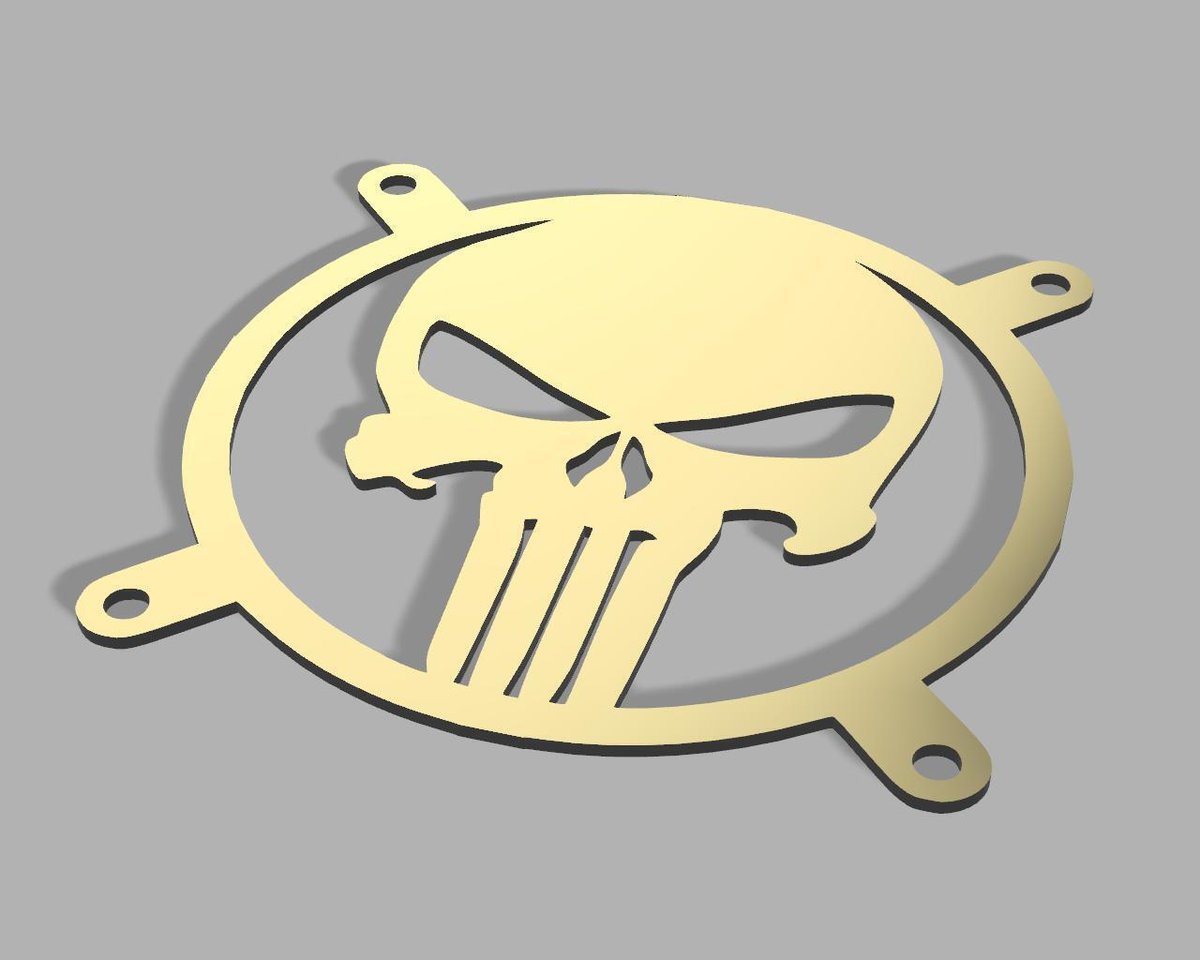
Drawing and Designing The Punisher Logo: A Creative Guide
For decades, the Punisher skull has stood as an undeniable icon, representing a raw, uncompromising brand of justice. It's a symbol that transcends comic book panels, appearing on everything from custom motorcycle tanks to military gear, instantly recognizable and profoundly impactful. But beneath its stark, almost brutal simplicity lies a surprising depth of design and an artistic challenge for anyone looking to master its form. If you're ready to tackle the powerful visual language of this emblem, you've come to the right place. This comprehensive guide on Drawing & Designing The Punisher Logo: A Creative Guide will equip you with the insights and techniques to bring this enduring symbol to life, whether on paper, screen, or any medium you choose.
At a Glance: Crafting the Iconic Skull
- Understand the Symbolism: Before you draw, grasp the Punisher skull's core meaning – raw justice, vengeance, and a formidable presence.
- Master Basic Anatomy: Break down the skull into fundamental shapes and proportions to ensure accuracy and impact.
- Tools of the Trade: Choose between traditional art supplies (pencils, ink) or digital software (Procreate, Photoshop, Illustrator) based on your preference.
- Focus on Key Features: The eyes, nose cavity, and segmented teeth are critical for conveying its menacing expression.
- Embrace Dynamic Line Work: Varying line thickness and strategic shading add depth and intensity.
- Beyond Replication: Learn to stylize and adapt the logo while preserving its unmistakable identity.
- Mindful Creation: Be aware of the logo's real-world implications and the distinction between fan art and commercial use.
More Than Just a Skull: Understanding the Icon's Power
The Punisher logo isn't merely a drawing of a skull; it's a statement. It's minimalist, yet brimming with a complex history and a confrontational message. Created by Gerry Conway and John Romita Sr. in 1974, it quickly evolved from a simple chest emblem to a universally understood shorthand for relentless vengeance. Frank Castle, the Punisher, is a character driven by tragic loss, and his skull emblem reflects that primal, unforgiving mission.
This isn't just about recreating lines; it's about understanding the raw emotion and steadfast resolve it conveys. When you approach all about the Punisher logo, you're not just drawing a shape; you're tapping into a narrative. The skull's stark white against black, or its various color adaptations, ensures maximum visibility and immediate recognition, making it an incredibly effective piece of visual communication. It's a masterclass in how powerful symbolism can be in design, a topic worth exploring further when considering the power of symbolism in logo design.
The Iconography of Vengeance
The Punisher skull is designed to intimidate. Its exaggerated, almost alien proportions — particularly the wide, empty eye sockets and the elongated teeth — strip away any sense of humanity, leaving only the grim reaper of justice. It's a direct threat, a warning that mercy is not an option. This visual aggression is central to its identity and must be carried through in your drawing.
Why the Punisher Skull Resonates
Its appeal lies in its simplicity and its powerful anti-hero narrative. People gravitate towards symbols that embody strength and a clear purpose. For many, it represents standing up against overwhelming odds, or an uncompromising stance on justice. Understanding this deep resonance helps you imbue your own rendition with the appropriate weight and character, moving beyond mere imitation to true interpretation.
Before You Draw: Setting Your Creative Foundation
Every great piece of art starts with careful preparation, and designing or drawing the Punisher logo is no exception. This isn't just about picking up a pencil; it's about establishing your purpose and gathering the right tools for the job.
Defining Your "Why": Purpose and Context
Before you even make a mark, ask yourself: Why are you drawing this? Is it for a personal art piece, a fan project, a custom t-shirt design, or simply to practice your illustration skills? Your "why" will dictate your approach, the level of detail, and even the style you choose.
- Personal Study: Focus on accuracy, proportion, and line quality.
- Fan Art: Experiment with unique styles, dynamic angles, or integrating it into a larger scene.
- Graphic Design: Consider how it will look scaled, on different backgrounds, or as part of a larger design system.
This initial context helps you make informed decisions throughout your creative process.
Gathering Your Arsenal: Tools of the Trade
Your choice of tools will significantly impact your workflow and the final aesthetic. Both traditional and digital methods offer unique advantages.
Traditional Mediums
For those who love the tactile experience, traditional tools offer unparalleled control and a distinct feel.
- Pencils: Start with an H pencil for light sketches, then move to a B or 2B for darker lines. Erasers are your best friend for refinements.
- Inking Pens: Fineliner pens (like Micron Pigma or Copic Multiliner) provide consistent line weight. Brush pens (like Pentel Pocket Brush) offer dynamic line variation, essential for capturing the skull's powerful contours.
- Paper: Smooth Bristol board or heavy drawing paper is ideal for inking, preventing bleed and allowing for crisp lines.
- Rulers and Compasses: While you want a hand-drawn feel, these can be invaluable for establishing initial symmetry and precise guidelines, especially for the eye sockets or main skull shape.
Digital Workflows
Digital art offers immense flexibility, undo capabilities, and an endless array of brushes and effects, making it an increasingly popular choice. If you're looking into digital art, it's worth exploring essential digital art tools to optimize your setup.
- Drawing Tablet: A Wacom Intuos, Cintiq, Huion, or XP-Pen are popular choices, offering pressure sensitivity that mimics traditional drawing.
- Software:
- Adobe Photoshop: Excellent for raster-based illustration, painting, and intricate shading.
- Adobe Illustrator: Ideal for vector-based logos. Vectors can be scaled infinitely without losing resolution, perfect for branding and varied applications.
- Procreate (iPad): A powerful and intuitive app for digital sketching and painting on the go.
- Clip Studio Paint: A versatile tool popular with comic artists, offering excellent inking and coloring features.
- Brushes: Experiment with different brush types for sketching, inking (clean lines), and shading (textures, gradients). Many artists create or download custom brushes to emulate specific comic book art styles. For example, some may use brushes that mimic comic book art techniques for a more authentic feel.
Regardless of your chosen medium, having a good reference image (or several) of the classic Punisher skull and its various iterations is crucial. Study its proportions, angles, and the way shadows play on its surface.
Deconstructing the Skull: Anatomy of a Vengeful Symbol
To draw the Punisher skull effectively, you need to understand its core anatomical features and how they contribute to its overall menacing presence. It’s not a medically accurate skull; it's a stylized, iconic representation.
The Classic Skull: Lines, Angles, and Shadows
The defining characteristic of the Punisher skull is its distinct exaggeration. It features:
- Massive, Elongated Cranium: It's often wider at the top, tapering slightly towards the jaw.
- Hollow, Shadowed Eyes: These are typically wide, almond-shaped, and completely black, conveying emptiness and an unrelenting stare.
- Prominent Cheekbones: Often sharply defined, adding to the gaunt, skeletal look.
- Large, Triangular Nose Cavity: Deeply set and often extending upwards into the brow.
- Gritted, Segmented Teeth: Unlike a natural jaw, the Punisher's teeth are usually depicted as distinct, blocky segments, giving a snarling, determined expression. They are often fused into a solid, unbroken line rather than individual teeth.
Evolution Through the Eras: Subtle Shifts and Stylizations
While the core elements remain, the Punisher skull has seen subtle variations throughout its history. Early versions might have been a bit more rounded or less aggressively stylized. Modern interpretations often lean into sharper angles, more pronounced shadows, and even slight distortions to enhance its ferocity. Exploring the history of the Punisher skull reveals these fascinating shifts, showing how artists adapted the symbol while maintaining its core identity. Some artists might simplify it further for maximum graphic impact, while others might add more texture and detail.
Key Proportions and Characteristics
Consider these general guidelines for the classic depiction:
- Head Shape: Imagine an inverted pear or a broad egg shape for the overall cranium.
- Eye Placement: The eyes are usually positioned relatively high on the skull, occupying a significant portion of the face. They are wide apart.
- Nose to Jaw: The distance from the bottom of the nose cavity to the bottom of the jaw is often shorter than a realistic skull, emphasizing the cranium.
- Symmetry: While the overall design aims for symmetry, a truly hand-drawn look can benefit from very slight, almost imperceptible imperfections, adding to its organic feel. For digital designs, perfect symmetry can be achieved with mirroring tools.
The Art of Creation: Step-by-Step Drawing Process
Now, let's get down to the practical steps of bringing the Punisher skull to life. This process focuses on building up the drawing from basic shapes to intricate details, applicable to both traditional and digital mediums.
Sketching the Foundation: Rough Shapes and Guidelines
Start loose. Don't press hard, and be prepared to erase.
1. Start with Basic Forms
- The Cranium: Begin with a large, slightly elongated oval or egg shape for the main part of the skull. This defines the overall size and angle.
- The Jawline: Below the cranium, sketch a narrower, somewhat U-shaped form for the lower jaw. Connect it to the main cranium with light lines for the cheekbones.
- Center Line: Draw a vertical guideline down the center of the skull. This is crucial for achieving symmetry. Add a horizontal line across the middle for eye placement.
2. Establishing Symmetry and Balance
Use your guidelines to ensure the skull doesn't appear lopsided. Regularly flip your canvas (digitally) or hold your drawing up to a mirror (traditionally) to catch imbalances that your eye might miss. Adjust your rough shapes until you have a balanced foundation.
Defining the Features: Eyes, Nose, and Teeth
This is where the skull starts to gain its identity.
1. The Menacing Eyes
- Placement: On your horizontal guideline, sketch two wide, almond-shaped ovals or slightly angled teardrop shapes for the eye sockets. Ensure they are equidistant from the center line.
- Angle: The outer corners of the eyes often angle slightly upwards, giving a more aggressive, almost demonic stare. Fill them in lightly to represent the black void.
2. The Gritted Teeth Expression
- Jaw Shape: Refine the jawline. The Punisher's jaw is often more angular and broad than a realistic skull.
- Tooth Segments: Instead of individual teeth, draw a series of vertical lines for the segmented "teeth." These are usually blocky and uniform. They often fill the entire lower jaw, extending quite wide. Make sure they align with the center line, with an even number of segments on each side, or a central segment. The top edge of these segments can be slightly serrated or a flat line.
3. The Nose Cavity
- Shape: Sketch an inverted, elongated triangle for the nose cavity, usually centered directly above the teeth and between the eyes. Its base should be wider, tapering upwards. It’s often deeply recessed and completely black.
4. Defining the Cheekbones and Temples
- Cheekbones: Draw sharp, often angular lines extending from the lower outer edge of the eye sockets down towards the jawline. These add to the gaunt, skeletal appearance.
- Temples: Refine the sides of the cranium, giving them a slight curve that rounds into the forehead and tapers towards the jaw.
Inking and Line Work: Bringing it to Life
Once your sketch is solid, it's time to commit with clean lines.
1. Clean Lines and Dynamic Weight
- Outline First: Using a fine-tipped pen or brush, carefully ink the main outline of the skull. Focus on making your lines smooth and confident.
- Vary Line Weight: This is crucial for adding dynamism. Use thicker lines for the outer contours of the skull, the bottom edges of the jaw, and anywhere shadows would naturally be deepest. Use thinner lines for internal details or areas where light might hit more. This variation adds depth and prevents the drawing from looking flat.
- Fill in Solids: Completely black out the eye sockets and the nose cavity with your inking tool. Ensure these areas are solid and opaque.
2. Adding Depth with Crosshatching and Shadows
- Strategic Shading: The Punisher skull often features deep, dramatic shadows. Think about a single light source (e.g., from above and slightly to one side) and where shadows would naturally fall:
- Under the cheekbones
- Around the temples
- Beneath the upper lip (if present, often just a shadow)
- Along the edges of the cranium, giving it a three-dimensional feel.
- Crosshatching/Rendering: For areas of mid-tone shadow, use crosshatching (overlapping parallel lines) or stippling (dots) to build up tone. Digital artists can use soft brushes or texture brushes for rendering.
- Highlights: While it's a stark symbol, subtle highlights on the forehead or top of the cranium can enhance its roundness.
Color and Texture (If Applicable): Beyond Black and White
While the classic is black and white, you might choose to add color for specific applications.
- Minimalist Approach: Often, a touch of red (e.g., for eyes or a subtle glow) can add another layer of aggression.
- Metallic Finishes: If designing for a practical application like a vehicle, consider metallic textures for a grittier, more industrial feel.
- Distress and Damage: Adding scratches, bullet holes, or cracks can tell a story and give the skull a weathered, battle-hardened look.
Designing Beyond the Classic: Personalizing The Punisher Skull
Recreating the classic skull is a fantastic exercise, but true design often involves adaptation and personalization. How can you put your own stamp on it without losing its unmistakable identity?
Adapting for Different Mediums and Styles
- Simplified for Small Scale: If it's for an app icon or a small pin, you'll need to strip away intricate details, focusing on the absolute core shapes.
- Detailed for Large Scale: For a mural or a poster, you can lean into textures, more complex shading, and subtle anatomical nuances.
- Stylistic Interpretations:
- Geometric/Vector: Reduce the skull to its fundamental geometric shapes for a clean, modern look.
- Gritty/Grunge: Add distressed textures, splatters, and rough edges for a worn, street-art vibe.
- Cyberpunk: Integrate circuit board patterns or glowing elements.
- Tattoo Style: Focus on bold outlines, solid blacks, and potentially some traditional tattoo motifs.
The key is to understand why the original works, and then selectively modify elements to fit your new context.
Incorporating Unique Elements Without Losing Identity
This is the tricky part. You want to be original but instantly recognizable.
- Subtle Modifications:
- Angle/Perspective: Draw it from a three-quarter view, looking up or down, rather than straight on.
- Proportion Shifts: Slightly exaggerate one feature (e.g., make the eye sockets even wider or the jaw more angular).
- Integration: Weave the skull into another design element, like merging it with a weapon, a city skyline, or a crack in a wall, ensuring the skull remains dominant.
- Consider the "Spirit": Whatever changes you make, does it still convey that sense of uncompromising justice and menace? If it starts to look friendly or silly, you've likely gone too far.
Thinking About Brand and Narrative
Every design tells a story. When you modify the Punisher skull, what new story are you trying to tell? Is it a darker, more desperate Frank Castle? A futuristic enforcer? A symbolic representation of a personal struggle? Let your narrative drive your design choices. The strong identity of the skull itself allows for these narrative explorations while keeping its roots intact.
Common Pitfalls and How to Avoid Them
Even seasoned artists can stumble when working with such an iconic symbol. Being aware of common mistakes can save you a lot of frustration.
Loss of Readability
- Problem: Overly complex details, too much texturing, or poor contrast can make the skull unreadable at a glance or at smaller sizes.
- Solution: Step back and view your design from a distance. Test it in different sizes. Prioritize clear, bold outlines and strong contrast, especially for the core features.
Over-Complication
- Problem: Adding too many extraneous elements, colors, or effects can dilute the skull's powerful simplicity.
- Solution: Remember that the Punisher skull's strength lies in its stark, minimalist nature. Ask yourself if each additional element truly enhances the design or merely clutters it. Often, less is more.
Lack of Impact
- Problem: A poorly proportioned or weakly inked skull can look flat, unmenacing, or even cartoonish.
- Solution: Pay close attention to the exaggerated features (eyes, teeth, jawline). Use strong line weights and deep, strategic shadows to give it presence and dimensionality. Ensure your angles convey aggression.
Ethical Considerations and Respecting the Source Material
The Punisher skull, while fictional, has gained significant real-world presence, particularly among military, law enforcement, and even certain political groups. This association brings ethical considerations that any artist should be aware of.
The Symbol's Real-World Implications
Frank Castle's symbol has been appropriated by various groups, sometimes in contexts that diverge significantly from the character's original intent as a vigilante who operates outside the law. While you are creating art, it's worth acknowledging the broader cultural context and potential interpretations of the symbol in the real world. Your design choices might subtly influence how your art is perceived by different audiences.
Fan Art vs. Commercial Use
- Fan Art: Creating the Punisher logo for personal enjoyment, practice, or sharing among fans is generally considered fair use and is a common practice.
- Commercial Use: Using the Punisher logo (or a design clearly derived from it) for commercial purposes (selling merchandise, branding a business) without permission from Marvel Comics (Disney) is copyright infringement. Marvel actively defends its intellectual property. Be extremely cautious if you plan any commercial application and assume you need explicit licensing.
Always be mindful and respectful of the original creators and the intellectual property rights involved.
Refining Your Design: Feedback and Iteration
No design is perfect on the first try. The refinement stage is where good designs become great.
Stepping Away and Coming Back
One of the most effective ways to spot flaws is to take a break. Step away from your drawing for a few hours, or even a day. When you return with fresh eyes, imperfections or areas needing improvement often become immediately apparent.
Seeking Constructive Critique
Share your work with trusted friends, fellow artists, or online communities. Ask for specific feedback: "Do the eyes look menacing enough?" "Is the jawline too weak?" "Does it feel balanced?" Be open to criticism, but also be discerning – not all feedback will improve your vision. The goal is to identify areas for improvement, not necessarily to please everyone. Iterate on your design based on the most valuable feedback, making small adjustments until you are satisfied with the final result.
Your Skull, Your Statement: Mastering the Icon
Drawing and designing the Punisher logo is a journey into iconic imagery, a testament to the power of simple yet impactful visual communication. By understanding its history, deconstructing its forms, and applying sound artistic principles, you can create a rendition that is both accurate to the original and uniquely yours.
Whether your goal is meticulous replication or a bold reinterpretation, remember that you are working with a symbol that resonates deeply. Approach it with respect for its origins, a keen eye for its design, and the confidence to make your own artistic statement. Go forth, sketch, ink, and design – and let your skull speak volumes.